How to Do Airbnb? Airbnb Tourism License Requirements and Application Process
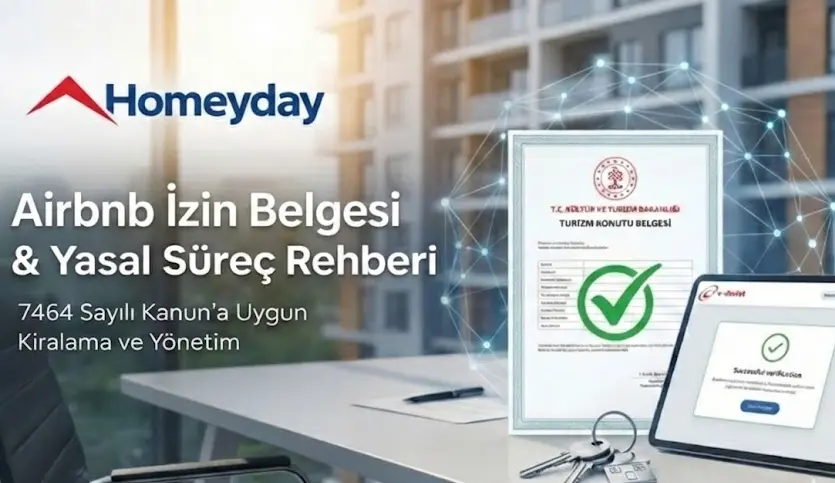
As of 2026, renting out your home to tourists via Airbnb in Turkey is no longer just about posting a listing; it is a professional process fully established within a legal framework under Law No. 7464. Rentals made without complying with the Airbnb law are subject to heavy fines (starting from 100,000 TL per apartment) in line with current inspections in 2026.
What is Airbnb?
Airbnb is an online platform where hosts rent out their vacant homes or rooms to tourists and business travelers on a short-term basis. Founded in San Francisco in 2008, the system connects millions of homes with guests worldwide as an alternative to hotel reservations. In Turkey, especially in tourism-heavy cities like Antalya, it has turned into both an additional income source and a professional investment model for homeowners.
Here is the step-by-step legal Airbnb Permit process:
1. How to Obtain an Airbnb Permit?
In order to obtain this document, applications are made only to the Ministry of Culture and Tourism through e-Government (e-Devlet). Physical applications or applications sent by mail are not accepted.
Airbnb Required Conditions and Documents:
Unanimous Consent Decision (The Most Critical Clause): If your home is an apartment, a consent letter obtained in the presence of a notary public or a photocopy of the decision book signed by all property owners (100% approval) in the building is required. If your property is in a residential complex (site), the approval of the owners in your specific block only is sufficient.
Title Deed and ID Information: Current title deed registry document and photocopy of the Turkish ID card.
High-Quality Housing (Residence) Exception: If your home has "residence" status and the management plan permits short-term rentals, you may not need to collect individual signatures from neighbors.
UETS Address: It is mandatory to be registered in the National Electronic Notification System (UETS).
Process: After your application, Ministry officials physically inspect the home (fire extinguisher, hygiene standards, etc.). Once approval is granted, you will be issued a Tourism Accommodation Plaque. Hanging this plaque at your door entrance is mandatory.
The period passing from application to plaque delivery varies between 4 and 8 weeks on average, depending on the completeness of the file and the inspection density of the Ministry. Having the property owners' approvals fully completed in front of a notary public is the most critical factor that shortens this period.
Airbnb Registration: Create Your Rental Listing Professionally
When registering on the Airbnb platform, the first steps towards becoming a "Superhost" are critical:
Identity Verification: Airbnb requests a comprehensive identity verification and Tourism Permit number from all hosts in accordance with current identity verification policies.
Listing Optimization: Professional photographs and SEO-friendly description texts ensure that your property ranks high in search results.
Calendar Management: Managing inspection days and availability without errors during the permit process increases your score by lowering cancellation rates.
The 100-Day Rule: Is a Permit Always Mandatory?
Law No. 7464 only covers rentals of 100 days or less. If you rent out your home for a period of 101 days and more at one single time, you do not need to obtain a Tourism Accommodation Permit; in this case, the rental falls under the provisions of the Residential Rental Agreement and you transition to a completely different legal ground.
This distinction creates an important point of choice in practice: short-term rentals offer higher income potential but come with the burden of permits and inspections; in rentals of 101 days and more, no permit is required, but the return is significantly lower compared to the short-term model.
Airbnb vs. Long-Term Rental
Add this directly under the "100-Day Rule" H3 as a single paragraph (without opening a separate H3, integrated into the flow):
This choice is usually boiled down to the following question: do you want a regular but fixed income, or a variable but higher income? The Airbnb model requires operational burden and legal monitoring, but the return potential is higher; long-term renting requires less management, but the return is generally more predictable and lower. We have analyzed in detail when you should prefer either of these two models in our comparison article on short-term vs. long-term renting.
How to Rent Out a House on Airbnb?
Once you obtain the permit, you must follow these legal and technical steps when renting out your property:
Identity Notification System (KBS): You must instantly enter the identity information of every guest into the police identification system (KBS). Serious administrative sanctions are applied for each day without entry.
Taxation and Invoices: Airbnb incomes are now considered "Commercial Income". Therefore, you must issue invoices through a sole proprietorship or a business, and declare VAT and Accommodation Tax.
Sublease Prohibition: You cannot rent out a house on Airbnb that you have rented from someone else. The permit is only issued to the property owner or the holder of the usufruct right.
Hosting: Guest Experience and Operation
Just handing over the key is no longer enough. For a 5-star Airbnb Superhost hosting experience:
Hygiene Standards: Full compliance must be ensured with cleanliness and safety protocols, which are also questioned during Ministry inspections. Another aspect as critical as fire extinguishers and first aid kits is the correct smoke and carbon monoxide detector selection, because inspections check whether the device is in working condition, not whether it is battery-operated or wired.
24/7 Communication: Responding quickly to instant questions from guests means high ratings and sustainable income.
Maintenance and Repair: Keeping the property constantly "like new" lowers depreciation costs and preserves investment value.
Making Money from Airbnb: Financial Return and Taxation
Airbnb incomes are now considered Commercial Income; this obliges individual investors to set up a sole proprietorship and issue invoices. Items like 2% Accommodation Tax over the nightly rate and 20% VAT-2 over the commission must be calculated correctly. We have analyzed all these tax items and current rates with detailed examples in our Airbnb tax guide.
A professionally managed Airbnb property provides up to 60% higher returns on an annual basis compared to the long-term rental model. As Homeyday, we maximize this difference in favor of our property owners through our dynamic pricing algorithms.
Cancelling an Airbnb Permit
How to Cancel an Airbnb Permit?
When you decide to sell your property or no longer wish to do short-term renting;
A "Permit Cancellation Request" must be created on e-Government (e-Devlet).
The Ministry plaque must be physically returned to the relevant Provincial Directorate of Culture and Tourism.
It is of vital importance to cease rentals and close tax office and municipality registries before the cancellation process is completed.
What is the Airbnb 25% Quota Requirement?
The number of permits to be issued under the name of the same person in the same building cannot exceed 25% of the total number of residential units in that building. For example; in a 20-apartment building, an Airbnb permit can be obtained for a maximum of 5 apartments under the name of the same person. If you are going to rent out more than 5 apartments, a "Tourism Operation Certificate" and a business license from the municipality are integrated into the process.
Can You do Airbnb with Tiny Houses or Prefabricated Homes?
According to the 2026 legislation, since Tiny Houses (wheeled vehicles with license plates) do not hold a "residence" status, they cannot receive permits within the scope of this law. For such structures, transactions can only be built upon "Camping" or "Tourism Facility" operation certificates.
Can Airbnb Fines Be Appealed?
When unauthorized rentals are detected, an appeal against the administrative fines imposed can be made to the Criminal Judicature of Peace within 15 days from the notification of the fine. As Homeyday, we bring our property owners into the legal ground without entering these risky processes at all.
Who Pays the Tax (VAT-2) on the Airbnb Commission?
This is the most overlooked topic. Since Airbnb is a foreign-based platform, 20% VAT-2 (VAT with Reverse Charge) must be declared and paid to the state over the service fee (commission) billed to the host. If this is not paid, you may encounter retroactive penalties in tax audits.
Both the legal (notary approvals, ministry application, KBS management) and operational (cleaning, guest communication, dynamic pricing) burdens of these processes can be highly wearing for individual hosts.
As Homeyday;
We analyze the legal compliance of your property.
We manage the Ministry application process and the certificate acquisition.
We handle all guest check-ins/check-outs and legal identity notifications on your behalf.
We manage your property to 5-star hotel standards, ensuring you become a Superhost and maximizing your income.
If just one neighbor in an apartment doesn't allow it, can I still do Airbnb?
In accordance with Law No. 7464, the unanimous approval of all property owners in apartment buildings is required; even a single dissenting vote from a owner prevents the Ministry from issuing a permit. In this case, you cannot rent out your home via Airbnb for periods of 100 days or fewer; the only solution is to extend the rental period to 101 days or more and fall under the provisions of a Residential Lease Agreement.
What is the penalty for operating Airbnb without obtaining a permit?
Property owners who are found to have rented out their property without authorization are subject to administrative fines under Law No. 7464, which, according to current legislation, starts at one hundred thousand Turkish Liras. In the event that the violation continues or is repeated, the fine can increase exponentially up to one million Turkish Liras. An appeal against the issued fine can be filed with the Criminal Judgeship of Peace within 15 days from the date of notification.
Is Neighbour Permission Required for Detached Houses?
No, co-owner approval is not required for detached houses, meaning single residential dwellings on a single parcel. However, this does not eliminate the requirement for a permit; owners of detached houses must also apply to the Ministry via e-Devlet and obtain a Tourism Housing Plaque.
Is It Necessary to Establish an Official Company for Airbnb?
No, it is not mandatory. Individual hosts can also issue invoices as individuals and declare their Airbnb income under Commercial Income. However, for property owners who manage multiple properties or are approaching the 25% quota limit in the same building, establishing a sole proprietorship is generally a preferred path as it both simplifies tax tracking and clarifies the accounting structure.
Are Airbnb Prices Per Person?
No, pricing on Airbnb is generally determined per night, i.e., property-based. However, hosts can define an Extra Guest Fee through the system for each additional guest above a certain number of guests (for example, 2 people). This way, while the base price remains fixed for the entire house, the total amount payable can vary depending on the number of people staying; by configuring this setting correctly, you can balance your variable costs such as water, electricity, and cleaning.
Real Estate Management