Choosing Smoke and Carbon Monoxide Detectors for Airbnb Homes: Battery-Powered or Wired?
Ensuring guest safety and complying fully with legal regulations in the Airbnb ecosystem is the most critical operational step for the sustainability of your property. While the platform's algorithm prioritizes listings that have fully equipped safety gear, new legal regulations in Turkey also make the use of these devices mandatory.
Particularly in short-term rental processes, choosing the correct detector not only protects the lives and safety of your guests but also directly boosts your listing's booking conversion rates.
1. Why Are Safety Detectors Mandatory in Airbnb Listings?
The Airbnb safety detector requirement is a legal obligation under the platform's guest protection policies and the Law No. 7464 in Turkey, which mandates the establishment of an early warning system against fire, smoke, and gas leaks in residential properties.
Having these safety features checked in the "Safety Features" section of the platform increases the listing quality in the eyes of search engine bots and guests who use filters.
📜 Law No. 7464 and Tourism Permit Document Requirements
When examining how to legally do Airbnb in Turkey, it is clearly seen that having a fire extinguisher and a smoke detector in the residence is a legal requirement to obtain a Tourism Residential Permit. The absence of this equipment during Ministry inspections can lead to the rejection of the permit application or the revocation of the existing plaque.
🎛 The Importance of Carbon Monoxide Detectors in Homes with Boilers
Particularly in rental properties with natural gas or boiler installations, having these detectors is a vital and operational necessity against the risk of leakage of odorless and invisible carbon monoxide gas.
2. Airbnb Detector Selection Guide: Which One Is Right for You?
The Airbnb detector selection guide is a strategic manual that enables property owners to choose the most efficient option among battery-powered, hardwired, or smart device models based on their operational budgets, the renovation status of the property, and the availability of regular maintenance staff.
🔋 A. Battery-Powered Detectors (Standalone Systems)
These are devices that generally run on a 9V battery and can be installed in five minutes. In the market, a standard battery-powered smoke detector can be found in the range of 150-400 TL, and a carbon monoxide detector for homes with boilers in the range of 400-900 TL. Not requiring renovation and being unaffected by power outages are its greatest advantages, while the difficulty of tracking battery life is a disadvantage. It is ideal for property owners who want to quickly achieve legal compliance.
🔌 B. Hardwired Detectors (Mains Connected)
These are systems integrated into the property's electrical wiring and are usually interconnected. The cost, including the device and installation labor, ranges on average between 800-1,500 TL per room. It eliminates the hassle of changing batteries, and when fire is detected in one room, devices in the entire house sound simultaneously; however, installation labor is costly and usually needs to be planned during the renovation phase.
3. Monitoring Safety Operations with Professional Property Management
Professional property management is a corporate service that eliminates operational risks—such as battery-powered devices beeping or malfunctioning during a guest's stay, which could lead to bad reviews—using data-driven software and field teams.
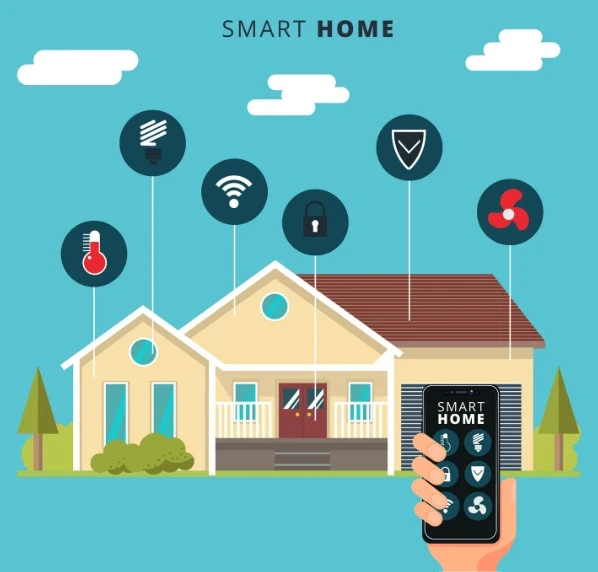
🚨 Wi-Fi Enabled Smart Solutions
Smart detector models send mobile notifications directly to the system administrator when the battery level is low or any leak is detected. In our Antalya Airbnb management operations, in properties where we integrate detector testing into our standard checklist inspections, battery/malfunction issues identified before the guest's arrival prevent negative experiences that could occur during check-in; this significantly reduces the risk of low ratings due to guest complaints.
🛠 Periodic Battery and Equipment Inspections
In individual management, tracking detector batteries is frequently forgotten. When working with a professional real estate management company, detector tests and battery replacement schedules are integrated into the checklist inspections conducted at every guest check-in and check-out.
4. Comparative Performance Matrix of Detector Systems
System Criterion | Battery-Powered Detector | Hardwired (Mains) Detector | Smart Wi-Fi Detector |
|---|---|---|---|
Installation Cost | 150-900 TL (very low) | 800-1,500 TL (high) | 1,200-2,500 TL (medium-high) |
Energy Source | 9V Standalone Battery | Mains Electricity (with backup battery) | Lithium Battery or Mains |
Maintenance Requirement | High (battery check every 6-12 months) | Low (annual periodic test) | Very Low (mobile reporting) |
Interconnection | None | Available | Available (via mobile network) |
Operational Tracking | Manual inspection required | Wiring check needed | Remote instant tracking via Antalya property management |
Price ranges may vary based on current market conditions; we recommend obtaining an up-to-date quote before purchasing.
Do I have to have a smoke detector and a carbon monoxide detector in my house?
A smoke detector is mandatory in all properties seeking to obtain a Tourism Accommodation License under Law No. 7464. If your property has natural gas, a boiler, or a fireplace, a carbon monoxide detector must also be present for guest safety and Airbnb Superhost criteria.
How long does the battery of battery-powered detectors last?
While standard battery models last 6-12 months, special lithium battery models can offer a battery life of up to 10 years. As Homeyday, we recommend 10-year lithium battery models for operational sustainability, because devices requiring frequent battery monitoring are the most commonly overlooked maintenance item in individual management.
Should I Buy a Smart (Wi-Fi) Detector?
Yes, if you are not physically present at the property. Smart detectors send notifications to your phone in case of an alarm or low battery even when you are away, allowing for an instant response, which is a practical solution especially for investors managing multiple properties remotely.
Does Having Batteries Cause Problems in Inspections?
No. The Ministry of Culture and Tourism inspectors do not look at whether the device is battery-powered or wired, but rather whether it is in working order and in the correct position.
Which brand or model should be chosen?
The device must have EN 14604 (for smoke) or EN 50291 (for carbon monoxide) certifications. Uncertified products may not be accepted in audits and also pose a risk to guest safety.
Real Estate Management